Jurisdictional Arbitrage and the Compliance Reckoning: What Regulated Businesses Must Know Before the Clock Runs Out
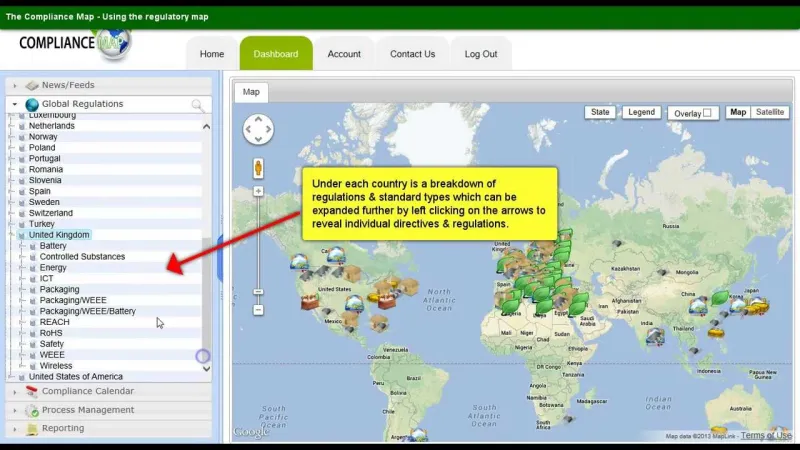
Photo: business compliance legal map multiple jurisdictions regulatory, via i.ytimg.com
For companies operating in heavily regulated industries across multiple US states or international markets, the temptation to exploit differences in regulatory standards is understandable. If one jurisdiction permits a practice that another prohibits, the business logic appears straightforward: do more where rules are lenient, less where they are strict, and optimize accordingly. This strategy—commonly referred to as regulatory arbitrage—has quietly shaped corporate compliance decisions for decades.
The problem is that the regulatory environment has fundamentally shifted. Enforcement agencies at the federal, state, and international levels are no longer working in silos. The assumption that inconsistencies will go unnoticed is no longer a viable foundation for a compliance program. For businesses in regulated industries, the reckoning is not hypothetical—it is already underway.
What Regulatory Arbitrage Actually Looks Like in Practice
Regulatory arbitrage takes many forms, and not all of them are immediately recognizable as compliance failures. A company might maintain robust anti-money laundering controls in states with aggressive enforcement histories while applying minimal standards in markets where oversight has historically been lighter. A multistate operator might calibrate its disclosure practices to the least demanding jurisdiction in its portfolio, treating that floor as the operational standard across all markets.
In some cases, the strategy is deliberate. In others, it emerges organically from decentralized compliance structures where regional teams interpret requirements independently and headquarters lacks visibility into the divergence. Either way, the outcome is the same: a patchwork compliance posture that creates material risk at every seam.
The financial services, cannabis, healthcare, and pharmaceutical sectors have all produced high-profile enforcement actions that trace back to exactly this dynamic. Regulators examining one market discover inconsistencies that prompt broader inquiries. What begins as a localized audit expands into a multistate investigation, and the costs compound accordingly.
The Rise of Cross-Border and Cross-Agency Regulatory Coordination
One of the most significant developments in the modern enforcement landscape is the growing sophistication of inter-agency coordination. The Financial Crimes Enforcement Network (FinCEN), the Securities and Exchange Commission, and state-level regulatory bodies have invested substantially in data-sharing infrastructure and joint examination protocols over the past decade. Similar trends are visible in healthcare compliance, where the Office of Inspector General regularly coordinates with state Medicaid fraud units.
At the international level, the Financial Action Task Force (FATF) has driven meaningful harmonization of anti-money laundering standards across member jurisdictions, reducing the gaps that arbitrage strategies depend upon. Even in emerging regulated industries—where federal frameworks remain fragmented—state regulators have formed interstate compacts and information-sharing agreements that compress the space between jurisdictions.
The practical implication for US businesses is direct: the jurisdictional gaps that once provided meaningful insulation are narrowing. A compliance posture calibrated to exploit those gaps is increasingly a posture calibrated for enforcement exposure.
The Real Cost Accounting of Regulatory Arbitrage
Businesses that pursue arbitrage strategies frequently underestimate the full cost structure of that approach. The immediate savings—reduced compliance staffing, simplified documentation, lower training expenditures—are visible and quantifiable. The downstream costs are less so, until they materialize.
Remediation is expensive. When regulators identify inconsistencies across a company's jurisdictional footprint, the response typically requires simultaneous corrective action in multiple markets. That means legal counsel in each jurisdiction, accelerated compliance buildout under regulatory scrutiny, and the operational disruption of implementing changes while continuing normal business operations. Companies that have undergone this process consistently report that remediation costs dwarf the compliance investment they had deferred.
Reputational damage compounds the financial exposure. In regulated industries, licensure and regulatory standing are foundational business assets. An enforcement action in one jurisdiction creates a public record that regulators in other markets review during license renewals, change-of-ownership applications, and routine examinations. The spillover effects can jeopardize business relationships that took years to build.
Investors and capital partners in regulated industries have also grown more sophisticated in their due diligence. A fragmented compliance architecture—or evidence that compliance standards vary materially by market—is increasingly treated as a governance red flag that affects valuation and deal structure.
Unified Compliance Architecture as a Strategic Asset
The alternative to regulatory arbitrage is not simply compliance with the strictest standard in every market, though that is often the most defensible approach. The more precise solution is a unified compliance architecture: a coherent framework that establishes consistent standards, clear accountability, and centralized visibility while allowing for jurisdictional customization where legitimate differences require it.
A well-designed unified architecture accomplishes several things simultaneously. It eliminates the operational complexity of maintaining divergent standards across markets, reducing the internal friction that decentralized compliance programs generate. It creates a documented foundation that regulators can examine and understand, which meaningfully reduces the duration and cost of examinations. And it positions the organization to respond to regulatory change with speed and confidence, rather than scrambling to patch inconsistencies under pressure.
For multistate operators in particular, the investment in unified compliance infrastructure is not a cost center calculation—it is a risk-adjusted return calculation. The cost of building and maintaining a coherent program is finite and plannable. The cost of a multimarket enforcement action is neither.
Building the Foundation Before the Examination Begins
The organizations best positioned to navigate the current enforcement environment are those that have made compliance architecture decisions proactively, before regulators identify the inconsistencies that arbitrage creates. That window of opportunity remains open for businesses willing to undertake an honest assessment of their current posture.
At Cedar MJ Consulting, we work with companies in regulated industries to conduct exactly that assessment—mapping jurisdictional exposure, identifying gaps in compliance consistency, and designing frameworks that reduce both legal risk and operational overhead. The goal is not compliance for its own sake. It is compliance as a durable business foundation.
The regulatory environment will continue to evolve. The agencies coordinating across it will continue to close the gaps. Businesses that align their compliance posture with that reality now will be substantially better positioned than those that wait for the reckoning to arrive.