When the Chain of Command Becomes a Chain of Failure: Rethinking Compliance Governance Structures
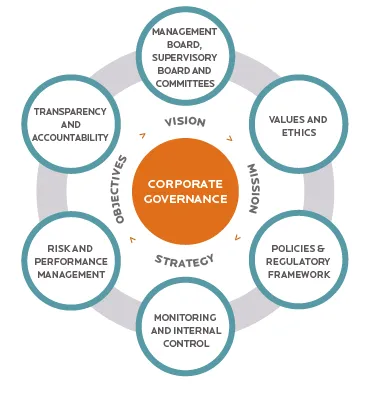
Photo: Asmi-corporatereporting.com, 2017, CC BY-SA 4.0, via Wikimedia Commons
The Architecture of Vulnerability
Most compliance programs in regulated industries were built during a quieter regulatory era — one where enforcement moved predictably, examination cycles were scheduled well in advance, and the compliance function operated as a methodical back-office discipline. The organizational structures that emerged from that era reflect its pace: layered reporting hierarchies, clearly delineated approval chains, and a concentrated locus of accountability at the top.
That architecture has not aged well.
When a regulator issues a consent order, launches an unannounced examination, or demands a rapid corrective action plan, the organizations that struggle most are rarely those with the weakest policies. They are, more often, those whose governance structures were never designed to move at regulatory speed. The compliance pyramid — with its upward-flowing information and downward-flowing directives — becomes a liability precisely when speed and accuracy matter most.
How Hierarchies Produce Blind Spots
The core problem with traditional compliance reporting structures is not malice or incompetence. It is architecture. Information traveling upward through multiple management layers is subject to compression, interpretation, and — critically — selective omission at every stop along the way.
A frontline compliance officer identifies a pattern of unusual transactions. That observation travels to a regional manager, then to a divisional compliance director, then to the Chief Compliance Officer, and finally, perhaps, to the board's audit committee. At each handoff, the signal is filtered through the priorities, assumptions, and risk tolerance of the person receiving it. By the time the concern reaches decision-makers with the authority to act, it may be unrecognizable — or it may never arrive at all.
This is not a hypothetical. Enforcement actions across financial services, healthcare, and cannabis — industries where Cedar MJ Consulting works most closely — have repeatedly revealed that material compliance failures were known at operational levels long before they surfaced at the executive or board level. The hierarchy did not suppress the information deliberately. It simply was not built to carry it faithfully under pressure.
The Bottleneck Problem in Fast-Moving Enforcement Environments
Regulatory pressure does not operate on a hierarchical timeline. When the Consumer Financial Protection Bureau, the DEA, or a state licensing authority initiates an enforcement inquiry, the response window is often measured in days, not weeks. Organizations with deeply layered approval structures face an immediate structural disadvantage: the people closest to the facts lack the authority to respond, while the people with authority lack proximity to the facts.
The result is a bottleneck at the exact moment when throughput is most critical. Legal holds are delayed while approvals are sought. Regulatory correspondence is drafted by committees rather than experts. Document production is slowed by uncertainty about who owns which records. These are not signs of a culture that ignores compliance — they are signs of a structure that was never designed for urgency.
In some of the most consequential enforcement outcomes of the past decade, regulators have explicitly cited delayed internal response as an aggravating factor in penalty determinations. The message from enforcement agencies is consistent: the speed and quality of your response to a compliance failure is itself a compliance matter.
What Distributed Accountability Actually Means
The alternative to hierarchical compliance governance is not the absence of structure. Distributed accountability frameworks retain clear lines of responsibility while eliminating the bottlenecks that hierarchy creates. The distinction is meaningful and worth examining carefully.
In a distributed model, compliance authority is delegated closer to the point of risk — not concentrated at the apex of an organizational chart. Business unit leaders carry genuine accountability for compliance outcomes within their domains, supported by embedded compliance professionals who report both to operational management and directly to the compliance function. Information flows laterally as well as vertically. Escalation pathways are pre-defined and tested, not improvised under pressure.
Critically, distributed accountability does not mean diffused accountability. The Chief Compliance Officer and the board retain oversight authority and strategic responsibility. What changes is the assumption that all meaningful compliance intelligence must travel through them before action can be taken. Pre-authorized response protocols — agreed upon during calm periods — allow operational teams to act immediately when a regulatory trigger occurs, with notification flowing upward in parallel rather than approval flowing downward in sequence.
Building Governance That Performs Under Pressure
For organizations evaluating their current compliance governance model, several diagnostic questions are worth posing before a regulator poses them first.
How many approval layers separate a frontline compliance concern from an executive decision? Each layer represents both a potential filter and a potential delay. If the answer is more than two or three, the structure warrants scrutiny.
Who has authority to initiate a regulatory response without executive approval? If the honest answer is no one below the C-suite, the organization is one enforcement inquiry away from a bottleneck crisis.
When was your escalation protocol last tested? Tabletop exercises that simulate rapid regulatory pressure — an unannounced examination, a whistleblower complaint, a sudden license review — reveal structural weaknesses that policy documents conceal.
Does your board receive compliance information directly from operational sources, or exclusively through executive summaries? Boards that rely entirely on curated upward reporting are, by design, insulated from the early signals that matter most.
The Regulatory Perspective on Governance Structure
It is worth noting that regulators have grown increasingly sophisticated in their assessment of compliance governance — not just compliance outcomes. Examination teams in sectors from banking to cannabis retail now evaluate whether an organization's internal structure is capable of producing reliable compliance performance, rather than simply reviewing whether current policies are technically adequate.
A compliance program that looks sound on paper but is governed by a structure that cannot respond to pressure is increasingly viewed by regulators as a program that is not, in any meaningful sense, functional. The governance architecture is part of the compliance record.
For organizations in highly regulated industries, this represents a significant shift in how compliance investment should be evaluated. Building robust policies without building a governance structure capable of executing them under duress is an incomplete strategy — and one that regulators are becoming more adept at identifying.
Conclusion
The compliance pyramid was a reasonable organizational response to a regulatory environment that no longer exists. In today's enforcement landscape — characterized by rapid escalation, cross-jurisdictional coordination, and regulators who evaluate organizational response as closely as organizational policy — hierarchical oversight structures carry structural risk.
Distributing accountability, pre-authorizing response protocols, and building lateral information flows alongside vertical reporting lines are not administrative preferences. They are strategic necessities for organizations that operate where regulatory pressure is not a possibility but a certainty. The question is not whether your compliance governance will be tested. It is whether your structure is built to pass.